
The Poker game has traditionally been about human connection just as much as about the cards themselves. The way somebody shuffles chips, how fast they make a bet, the little narratives formed around an opponent- all these subtle clues are collected for survival. And then came a twist in the online world: the anonymous tables in poker. Suddenly, names and histories disappear and leave behind a canvas in which the face motors of a poker table full of players.
It feels odd. A little like stepping into a room filled with masked faces. Yet, once you sit at the table and commence play, you observe the thrill, the excitement, and the challenge that comes with it.
Let us lift that corner and see how anonymous poker tables operate, why they came into being, and what this means for players like you.
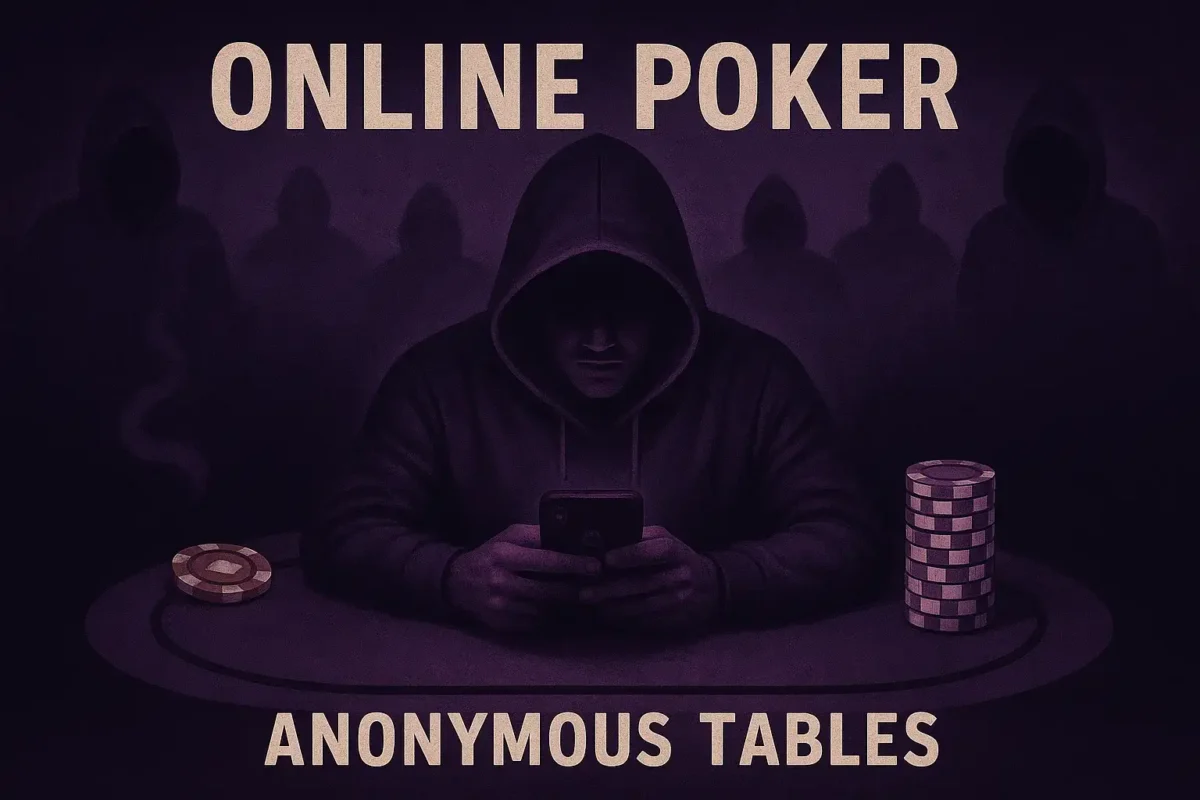
What Are Anonymous Tables in Poker?
In a live table game, every player can see each other’s online usernames. Through the players can always remember the player that bluffed like crazy, the tight reg, or the one that always tilts after losing a big pot. This recognition vanishes at the anonymous poker table. With each session, it resets.
Rather than seeing the player’s names, they see the generic term like “Player 1” or “Seat 4.” The software resets these generic terms each time you sit at a table. No one knows you beyond what you’ve played in the hands you are playing now.
This is a very different thing for this game. You can’t rely on past notes. You can’t make a dossier on someone that you carry from day-to-day. The only thing that matters is now, and this hand.
Why Did Anonymous Tables in Poker Appear?
There are three main reasons why anonymous tables came to life:
To protect casual players. Newbies don’t want to be easy targets. Anonymity offers them an extra layer of protection against data miners and noted players.
To create fairness in the games. Without having years of accumulated back stats, players have to rely on more instinctual play and raw skill.
To make poker fresh again. When every table resets, the game becomes less about spreadsheets and more about puzzles.
In short, not having a profile is supposed to make these tables force players back to thinking about table decisions and not the databases behind it.
How Anonymous Tables Change The Game For Poker
If you are more accustomed to grinding with long-term reads, entering these tables feels like a storm without compass-and presents opportunity if you adjust to this new scenario.
Quick profiling: Patterns become evident within minutes. Who limps too often? Who folds on the flop too quickly? Those tiny flashes are your only clues.
Fresh table image: A new one every session. Depending on a clean slate, you could be aggressive without worrying that someone would remember your bluff from last week.
Population tendencies matter more: You can’t really tag individuals anymore, so now your thinking turns towards “the average player at this stake.” Do they over-call rivers? Do they under-bluff? These population reads help to guide you when extracting thin data.
Always have GTO on your mind: You tend to lean back on solid baseline ranges and balanced play whenever you have slight knowledge about the game.
In other words, anonymous tables in poker pull you toward sharp fundamentals and quick adaptation.
The Good Side of Anonymous Tables in Poker
Fairly speaking, there’s most to love.
- Newbies feel safer. They play without feeling like prey under the spotlight.
- Fewer seat-hunting. Regulars chasing soft spots do not pick apart tables that fast.
- Pure poker battles. Decisions, rather than based on memory, become skill-inclined, in the moment.
It’s almost like a reset button for the culture of the game.
The Challenges of Anonymous Tables in Poker
Well, the counterbalancing isn’t that good.
- Edges get thinner. If your successful game strategy used player-specific notes and tracking, your edge becomes smaller.
- Game selection becomes harder. You do not know who your opponents are until you have played a few hands.
- Loneliness. Without names, poker feels less social. No rivalries, no familiar faces, just an ambush of rotating strangers.
While anonymous poker tables may feel fairer, they also feel very much imposing.
Bankroll and Variance in Anonymous Tables in Poker
One simple rule: variance.
When edges shrink, swings enlarge. You can’t isolate weak opponents repeatedly. This suggests tightness in bankroll management. Instead of using a buffer of 50 buy-ins, try 70 or 80.
Also, short-term reads can be misleading. Someone who looks loose over 10 hands can all of a sudden become very tight. This leads to additional variance in anonymous poker tables. Now patience and discipline would be even more important.
What Anonymous Tables Are Going to Mean for the next few years ?
These tables will probably not replace the traditional ones, but they are likely to stay around. They fit into a fast-growing demand for fairer games, less predation, and more balance between new players and veterans.
Think of it as poker’s kind of response to the modern world, it offers privacy, new beginnings, and protection from information overload. Yet the game remains the same: position, ranges, and reading the story of a hand.
It is not whether anonymous tables are better or worse; the only real question is whether you can adapt.
Which online poker rooms, support anonymous tables ?
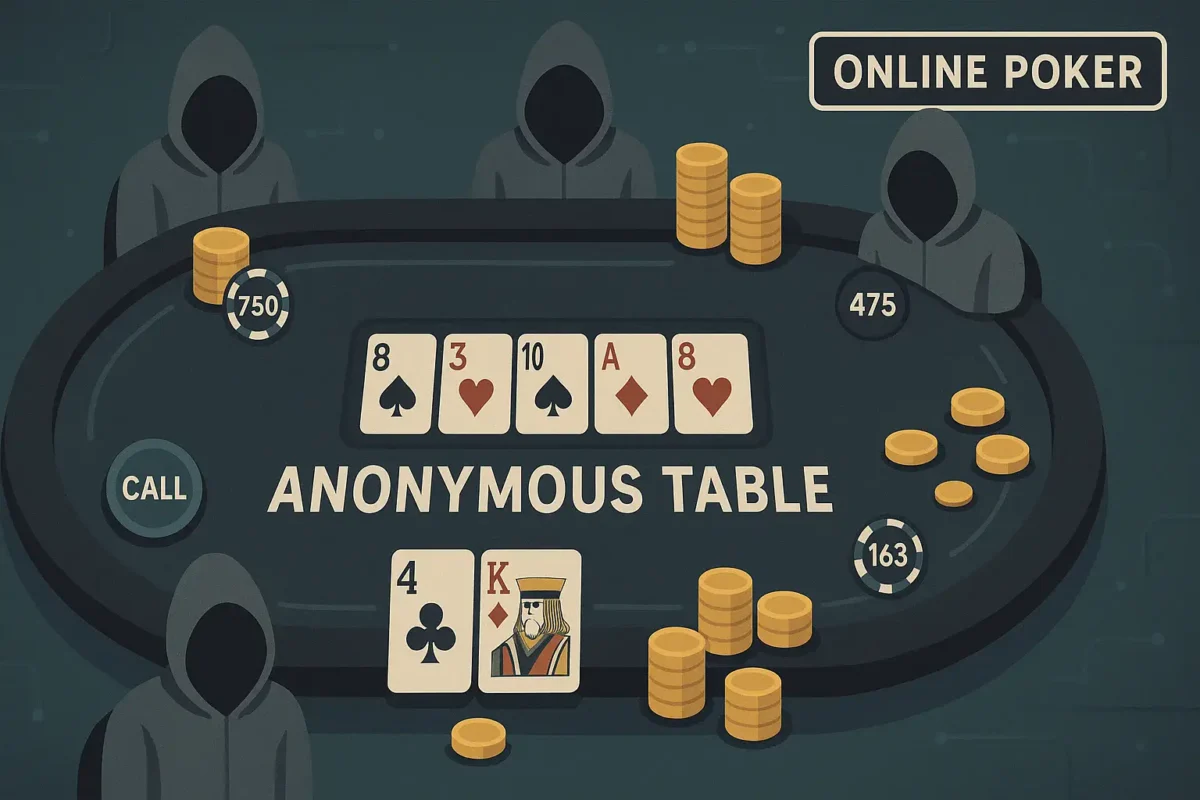
While there are several options to play anonymously, the number 1 spot in 2025 is on the PokerBros app. There you can find a private Korean club with 100% anonymous tables only. Whether it is for tournaments or ring games.
The downside of this room is that there is almost no Omaha, but the good traffic on NLH and MTT tables makes up for it. Especially when it is full of recreational players.
Final Thoughts
Poker is an ever-evolving game. From smoky backrooms to televised tournaments, the game keeps changing from live tells to HUDs. Anonymous tables in poker are simply the next stage of that journey.
Some consider it frustrating: no long-term reads, no easy prey. Others see it as a breath of fresh air: cleanliness, balance.
The mask is here, nonetheless. And what lies behind it will be the same old question that has ever defined poker: How well do you think? How well can you adjust? How well can you make the correct decision when the crunch comes?


