
In most cases, poker players don’t lose money because they can’t understand the game—they lose because they can’t leave their seat.
At some point in nearly every session, there’s a subtle shift. You’re still at the table, still clicking, still “focused”… but your edge is gone. Decisions slow down. You start oversimplifying spots you have no business oversimplifying. You fall back into habits instead of thinking critically about what’s happening right now.
That is Decision Burnout in Poker, and it’s one of the most expensive problems poker players deal with.
What Is Decision Burnout in Poker?
Decision Burnout is NOT tilt (emotional frustration).
Decision Burnout is NOT boredom (lack of stimulation).
Decision Burnout is NOT a lack of discipline.
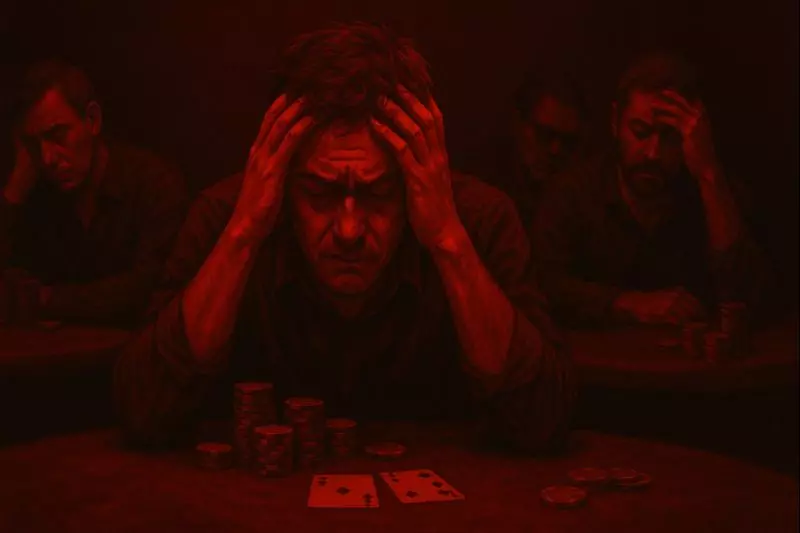
Decision Burnout in Poker happens when you’ve made so many decisions—often in rapid succession—that you become mentally fatigued and your decision quality drops.
To play poker well, you have to constantly:
- Build ranges for your opponent(s).
- Track stack sizes.
- Interpret opponent tendencies and strategy.
- Choose bet sizes.
- Regulate emotions (stay steady).
Each decision costs mental energy. One decision won’t hurt you. Hundreds will.
Exhaustion occurs when your brain starts protecting itself by taking shortcuts. You’re still “thinking,” but it’s mostly surface-level thinking.
And at that point, EV starts leaking.
Why Decision Burnout in Poker Is So Dangerous
One reason Decision Burnout in Poker is so dangerous is that it feels completely normal.
- You don’t feel tilted.
- You don’t feel confused.
- You usually feel “fine.”
But your decisions become slightly weaker:
- A call you would normally fold.
- A bluff you don’t follow through with.
- A value bet sized too small.
- A spot you avoid because it feels annoying to think through.
None of these is catastrophic by itself. Collectively, they crush your win-rate.
Small Decrease in Accuracy = Huge Losses
| Decision Quality | Long-Term Result |
|---|---|
| Sharp | Clear winner |
| 3–5% less accurate | Marginal winner |
| 6%+ less accurate | Break-even or losing |
A small decrease in accuracy (caused by Decision Burnout in Poker) can be enough to erase your edge.
When Does Decision Burnout in Poker Start?
Many players assume Decision Burnout in Poker only happens after a marathon session.
That’s usually wrong.
For most players, exhaustion begins after 70 to 120 minutes of continuous play.
Once it starts, you’ll often see:
- More mis-clicks.
- More bet-sizing errors.
- More autopilot decisions.
Around 150 minutes, decision-making quality often collapses.
The worst part? This is usually when players think they’re “in the zone.”
Why Decision Burnout in Poker Can Feel Like Confidence
When Decision Burnout in Poker sets in, your brain shifts from critical analysis to pattern recognition.
That feels fast. Efficient. Confident.
You start telling yourself:
- “This is normal.”
- “I’ve seen this spot before.”
- “No need to overthink it.”
Sometimes that works. More often, it doesn’t.
Poker is unforgiving when confidence turns lazy.
Decision burnout convinces you that speed equals skill, when what’s really happening is you’ve stopped questioning your assumptions.
Good Players Are Hit Hardest by Decision Burnout
Better players often burn out faster.
Better players:
- Think more critically.
- Consider more variables.
- Adjust more frequently.
That extra processing adds up.
Beginners clicking “Fold” aren’t making many real decisions. Strong players are. So Decision Burnout in Poker quietly drains the mental resources of good players more than it drains weaker ones.
Online vs. Live Decision Burnout in Poker
Decision Burnout in Poker shows up differently depending on whether you play online or live.
| Factor | Online Poker | Live Poker |
|---|---|---|
| Decision volume | High | Lower |
| Speed of burnout | Fast | Slow |
| Session length | Usually shorter | Usually longer |
| Primary risk | Autopilot | Mental drift |
Online players burn out quickly because decision volume is relentless.
Live players burn out slowly because sessions are long and attention has to be sustained.
Either way, EV leaks the same way once Decision Burnout in Poker takes over.
How to Know If You’re Suffering From Decision Burnout in Poker
Decision Burnout in Poker always leaves clues. Watch for:
- Slower decisions in spots that were once automatic.
- Second-guessing hands you normally trust.
- Emotional swings after relatively small losses.
- Clicking buttons without a clear thought process.
If you notice two or more, your decision quality is already deteriorating.
That’s your signal to stop or reset.
Why Playing Through Decision Burnout Makes It Worse
Pushing through fatigue doesn’t build toughness.
It builds bad habits.
When you keep playing while experiencing Decision Burnout in Poker, you normalize shallow thinking. Over time, shallow thinking becomes your default.
That’s how good players quietly turn into average players—without realizing what happened.
In fact, many of the players in private poker clubs neglect the decision burnout and often play tilted.
Professional Ways to Handle Decision Burnout in Poker
Winning pros don’t rely on motivation. They rely on structure.
Common pro habits include:
- Capping sessions at 60–90 minutes.
- Taking 3–5 minute breaks regularly.
- Using alarms that force a break or end the session.
- Ending sessions based on mental condition, not bankroll results.
Pros expect Decision Burnout to happen, so they plan around it.
Create a Basic Anti-Burnout System
You don’t need anything complicated. Start with four rules:
- Maximum session length.
- Forced breaks.
- Mental stop-loss.
- Post-session review.
Those four alone will put you ahead of most players.
Final Thoughts
Poker doesn’t reward endurance.
Poker rewards clarity.
Your edge doesn’t disappear in one bad beat. It bleeds away when decision burnout in poker takes hold and you keep playing anyway.
The best players aren’t the ones who grind the longest.
They’re the ones who recognize when their minds are tired—and respect it.
If poker psychology is an interesting topic for you, and prefer to be notified directly on your phone when there is a new article on the subject, subscribe to our Telegram New Channel.


